
Custom SSL certificates for https requests
A call recording request looks something like the following:
http://<Asterisk IP>:8077/get_conversation_recording?id=1608120945.929&from=89221234567&to=101
To enable receiving records via https, you need to configure this function in the admin area on the page:
http://<Asterisk IP>:8077/config/module
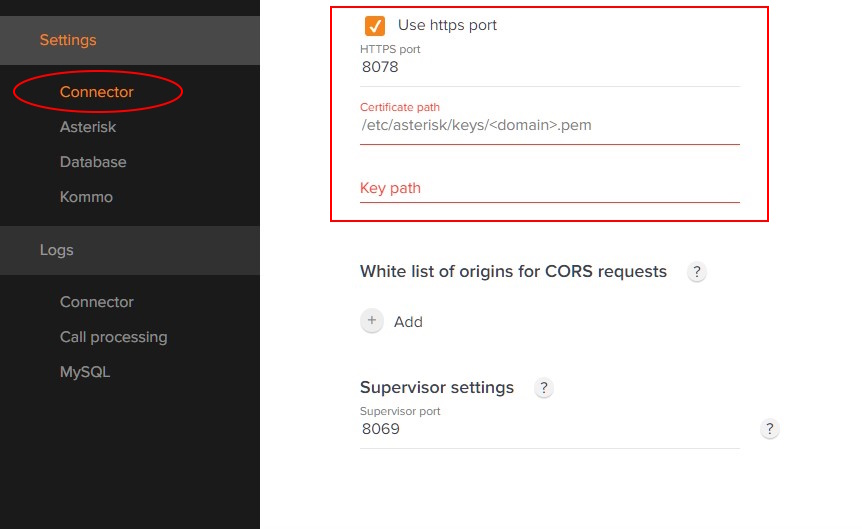
- You need to enable the "Use https port" function.
- The default port is 8078 (can be changed). For records to be accessible from outside the network, port 8078 must be open to Asterisk.
- Add the path to the certificate and key. These can usually be found at /etc/asterisk/keys/ You need the addresses to the files .pem and .key
The easiest way to get a certificate is through letsencrypt service. - Save the settings.
The new record link will look like this:
https://<Asterisk IP>:8078/get_conversation_recording?id=1608120945.929&from=89221234567&to=101
To retrieve new link entries from an external network, port 8078 must be open on the router.